DPDP Act Compliance Services in India
Contact Us
Univate Solutions delivers end-to-end DPDP Act Compliance services across India for organisations in IT, fintech, BFSI, healthcare, e-commerce, and manufacturing. Our experienced privacy consultants run your full compliance project — from personal data flow mapping and gap assessment through to consent implementation, Data Principal rights workflows, and ongoing governance. Penalties under the DPDP Act can reach ₹250 crore per incident. Book a free assessment and get a fixed, all-inclusive quote. Call +91 72599 45454 or WhatsApp us.
What Is DPDP Act Compliance?
The Digital Personal Data Protection Act, 2023 (DPDP Act) is India's first comprehensive statute governing how organisations collect, process, store, and transfer personal data. The Act was enacted on 11 August 2023. The DPDP Rules, 2025, notified by MeitY on 13 November 2025, operationalise it with specific technical and organisational obligations that every Data Fiduciary must meet.
Key definitions every organisation must understand:
Any person or entity that, alone or jointly with others, determines the purpose and means of processing personal data. If your organisation collects customer names, email addresses, phone numbers, or payment data, you are a Data Fiduciary.
The individual whose personal data is being processed. They have enforceable rights to access, correction, erasure, and grievance redressal under the Act.
Any entity that processes personal data on behalf of a Data Fiduciary. Your vendors, cloud providers, and outsourced processors fall here, and your Data Processor contracts must include mandatory data protection provisions.
An entity designated by the Central Government based on data volume, sensitivity, or national security risk. SDFs face additional obligations including mandatory Data Protection Officer (DPO) appointment, annual independent audits, and Data Protection Impact Assessments (DPIAs).
DPDP Rules 2025 — Enforcement Timeline and Key Deadlines
The DPDP Rules 2025 adopt a phased compliance approach. Understanding the deadlines is critical for planning your programme now.
| Phase | Deadline | What Becomes Mandatory |
|---|---|---|
| Phase 1 | November 2025 (Active now) | Data Protection Board of India (DPBI) established; oversight functions begin |
| Phase 2 | 13 November 2026 | Consent Manager framework operational; organisations must be technically ready to integrate |
| Phase 3 | 13 May 2027 | Full compliance deadline — notices, security safeguards, breach notification, data erasure, Data Principal rights, children's data provisions, SDF obligations all mandatory |
Univate designs your compliance programme to meet both the November 2026 (consent systems) and May 2027 (full obligations) deadlines in a structured, phased manner.
Key Obligations Under the DPDP Act for Data Fiduciaries
Every Data Fiduciary in India must implement the following core obligations under the DPDP Act and DPDP Rules 2025. Univate implements and documents all of these as part of your compliance programme.
1. Lawful Consent
Consent must be free, specific, informed, unconditional, and unambiguous — obtained through clear affirmative action. Generic, bundled, or pre-ticked consent is not valid. Notices must be standalone, plain language, and available in English plus required Indian languages. Consent records must be maintained for 7 years.
2. Purpose Limitation & Minimisation
Personal data may only be processed for the specific purpose for which consent was obtained. Collecting more data than necessary for that purpose is a violation.
3. Data Security Safeguards
Reasonable technical and organisational security measures across all systems handling personal data — encryption, access controls, authentication, logging, and regular security testing. Highest penalty: up to ₹250 crore per incident.
4. Breach Notification
Notify the Data Protection Board of India (DPBI) without delay, followed by a detailed report within 72 hours. Affected Data Principals must also be informed without delay. Penalty for failure: up to ₹200 crore.
5. Data Retention & Erasure
Personal data must be erased once its purpose is fulfilled, unless legally required otherwise. Large e-commerce platforms with 2 crore+ users must erase data within 3 years of last transaction or login. Erasure requests must be completed within 90 days.
6. Data Principal Rights Fulfilment
Individuals can access their data, request correction, request erasure, withdraw consent, and file grievances. Documented workflows must handle each within defined timelines.
7. Children's Data
Processing personal data of anyone under 18 requires verifiable parental consent, including via DigiLocker integration. Behavioural tracking, profiling, or targeted advertising to children is strictly prohibited.
8. Significant Data Fiduciary (SDF) Obligations
SDFs must appoint a Data Protection Officer (DPO), conduct annual independent audits, complete DPIAs for high-risk processing, and comply with stricter cross-border transfer conditions.
Univate conducts a full DPDP gap assessment against all applicable obligations, identifies which SDF provisions apply to your organisation, and implements each control in a documented, audit-ready manner.
The DPDP Act Compliance Process in India
Univate runs every step so your team can focus on running the business.
Personal Data Flow Mapping
We identify every category of personal data your organisation collects, processes, stores, and shares — structured data (databases, CRMs, HR systems) and unstructured data (email, documents, third-party integrations). Data flow maps become the foundation of your entire compliance programme and your first line of evidence during a regulatory inquiry.
Gap Assessment Against the DPDP Act and Rules 2025
We benchmark your current practices — consent mechanisms, privacy notices, data retention policies, security controls, vendor contracts, and grievance processes — against all applicable DPDP obligations. Each gap is documented with a risk rating tied to the specific penalty provision.
Consent Mechanisms and Privacy Notices
We design and implement lawful consent frameworks for your digital products and physical touchpoints, including standalone plain-language consent notices in required languages, consent withdrawal workflows, and — ahead of the November 2026 deadline — technical readiness to integrate with registered Consent Managers.
Data Principal Rights and Grievance Processes
We build documented workflows for access, correction, erasure, and grievance redressal requests, with SLA tracking to meet statutory timelines, plus breach notification playbooks covering the required 72-hour DPBI reporting process.
Ongoing DPDP Governance
Compliance is not a one-time exercise. We establish your data governance structure, including log retention (1 year minimum required under the Rules), periodic reviews, vendor contract updates, and — for SDFs — annual audit coordination and DPIA scheduling.
The DPDP Act Compliance process in India
DPDP Act Compliance follows a clear path and Univate runs every step with you.
- Data mapping of personal data flows.
- Gap assessment against the DPDP Act and Rules 2025.
- Consent and notice mechanisms.
- Data Principal rights and grievance processes.
- Ongoing governance, audits, and DPIA scheduling for SDFs.
Most Indian organisations reach DPDP readiness in 2 to 4 months.
Get in Touch
Who Needs DPDP Act Compliance in India?
Any organisation that processes the personal data of individuals in India must comply — regardless of where the organisation is based. A US or UK company serving Indian users falls under the Act. An Indian startup collecting customer emails is a Data Fiduciary from the moment it processes that data.
In practice, DPDP compliance is essential for:
Univate serves organisations across Chennai, Hyderabad, Delhi, Pune, Bangalore, and Mumbai, as well as remote-first organisations operating nationally. Our cybersecurity services and data privacy compliance programme are integrated so that technical safeguards and legal compliance are implemented together, not as separate workstreams.
DPDP Audit Services in India
A DPDP audit is a structured review of your organisation's data processing practices, security controls, governance frameworks, and documentation against the requirements of the DPDP Act and DPDP Rules 2025. It produces the evidence your organisation needs to demonstrate compliance to the Data Protection Board of India, enterprise clients, and regulators. Univate's DPDP audit services in India include:
| Audit Service | What It Covers |
|---|---|
| Gap Assessment Audit | A comprehensive review of your current state against all DPDP Act obligations — consent, notices, data retention, security safeguards, vendor contracts, and Data Principal rights workflows. Delivered with a gap register, risk ratings, and a prioritised remediation roadmap. |
| Data Protection Impact Assessment (DPIA) | For Significant Data Fiduciaries and any high-risk processing activity (large-scale profiling, sensitive data processing, new technology deployment), we conduct structured DPIAs that assess privacy risk and document mitigation measures. |
| Security Safeguards Audit | Technical review of encryption at rest and in transit, access management, authentication, logging and monitoring, incident detection, and API security — measured against the "reasonable security safeguards" standard under Section 8(5). |
| Vendor & Data Processor Audit | Review and update of all Data Processor agreements to include mandatory DPDP provisions on data security, breach notification, and accountability, plus third-party vendor risk assessment. |
| Audit Readiness Assessment | For Significant Data Fiduciaries required to conduct annual independent audits, Univate prepares your evidence package and documentation ahead of the formal audit appointment. |
Univate delivers DPDP audit services across India including Hyderabad, Chennai, Delhi NCR, Pune, Bangalore, and Mumbai, with remote delivery available for distributed organisations.
DPDP Act Compliance Cost in India
DPDP compliance cost depends on your organisation's size, data footprint, the number of systems handling personal data, and whether you are designated as a Significant Data Fiduciary.
Limited data processing with straightforward consent flows.
Multiple products, employee data, and vendor ecosystems — full gap assessment, consent implementation, rights workflows, and documentation.
Full programme implementation including DPO support, DPIA programme, annual audit coordination, and ongoing governance.
Univate provides a free gap assessment and a fixed, all-inclusive quote after reviewing your data environment. There are no surprise fees.
Why Choose Univate for DPDP Act Compliance?
Univate's privacy consultants have guided more than 300 enterprises through information security and data privacy compliance across India and internationally. Our team holds active CISA, CISSP, and CCSP credentials and brings cross-framework expertise across GDPR, ISO 27001, ISO 27701, HIPAA, and SOC 2.
DPDP Act Compliance FAQ
What is the DPDP Act and when does it apply?
Who is a Data Fiduciary under the DPDP Act?
What are the penalties for non-compliance with the DPDP Act?
What is a Significant Data Fiduciary (SDF) and what additional obligations apply?
What is the cost of DPDP Act compliance in India?
How long does DPDP Act compliance take?
Does the DPDP Act apply to employee data?
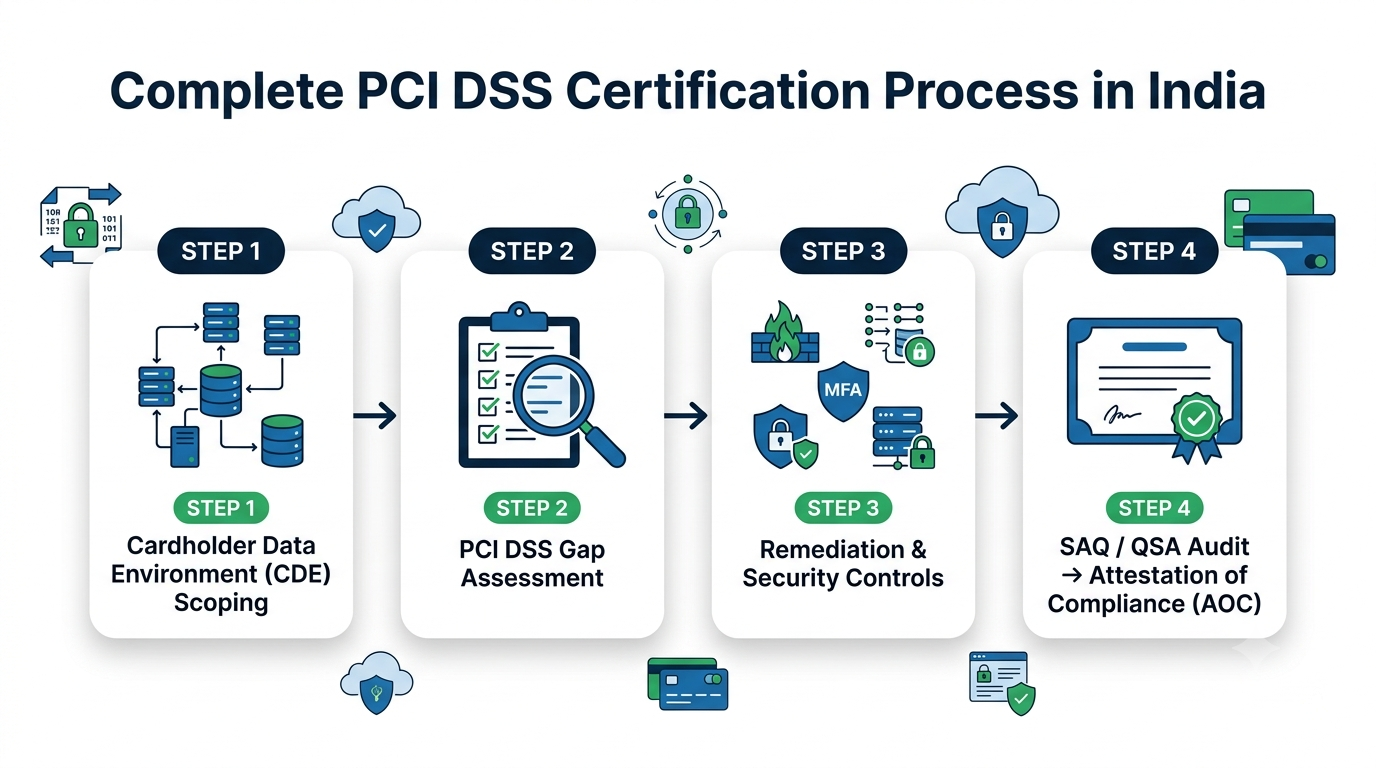
How does DPDP compliance relate to ISO 27001 or PCI DSS?
Get DPDP Act Compliance Ready with Univate
Univate delivers DPDP Act compliance services for organisations across India — fintech platforms in Hyderabad, e-commerce businesses in Delhi, IT services firms in Pune, healthcare organisations in Chennai, and enterprises across Bangalore and Mumbai. We also serve remote-first and multi-location organisations nationally.
The May 2027 enforcement deadline sounds distant. Your programme, however, needs to be built now — consent systems must be ready by November 2026, and implementation of the full suite of obligations takes 4 to 12 months. Book a free DPDP gap assessment: we will map your data flows, assess your current compliance posture, confirm whether SDF obligations apply, and give you a fixed, all-inclusive quote on day one.
Call +91 72599 45454Part of: Data Privacy and Compliance in India